Books

When I look back at the books I’ve written over the past four decades, I also see a part of my own story reflected in them. The subjects may seem quite different, but at their core, I’ve always been driven by the same question: Why are living organisms the way they are, and why do they behave as they do?
It all began with medicine and natural healing. Even back then, I was interested not only in people’s physical health, but also in their psychological well-being and behavior. Over time, my interests shifted increasingly toward biology, particularly evolution, ecology, and the complex interactions among living organisms. An important influence was my close friendship and collaboration with the late Professor Ellen Thaler, a behavioral biologist, which spanned 23 years and gave me many new insights into animal behavior and social relationships. Eventually, this perspective brought my interest full circle, back to human beings — this time not as patients, but as social creatures whose thoughts and actions shape the way we live together.

Coral export facility in Indonesia, 2004: This humphead wrasse (Cheilinus undulatus) loved being scratched. It probably missed having a cleaner fish around — and my hand apparently made a pretty good substitute.
I also owe my passion for nature photography to my books. Originally, I simply wanted to illustrate my writing with my own photographs. But that soon turned into a journey of discovery through macro and microscopic photography, one that continues to fascinate me to this day.
My involvement in reef aquariums, however, never stopped at writing and photography. Whenever something sparked my curiosity, I wanted to experience it firsthand and play an active role: developing and building aquarium equipment, setting up aquariums, propagating corals, and studying how they live.
The coral farming projects I initiated in the Philippines beginning in 1993, and later in Indonesia, became particularly important to me. The idea was entirely new at the time: growing corals in shallow coastal waters for the restoration of damaged reefs and for the aquarium trade, while providing fishing families with a livelihood that depended on preserving reefs rather than destroying them. Along the way, there were diving expeditions, collaborations with marine biologists, television productions, and presentations at international conferences.
Over the years, 33 book titles have been published in twelve languages, with well over a hundred editions. Behind these books lie countless hours of research, writing, and photography — but above all, the joy of discovering connections, questioning accepted beliefs, and sharing those discoveries with others. Through my books, I also wanted to show how fascinating, yet vulnerable, the natural world is — and why treating it with care matters.
Ultimately, two things have always driven me: the joy of understanding and the desire to use that understanding to make a difference.

Pandemie – Der Preis der Wahrheit
For decades, I had wanted to write a novel. Over the years, I had worked on several manuscripts, learning something new from each one. But it wasn't until I read an interview with virologist Christian Drosten in the German newspaper taz that I found the inspiration for my first published thriller. The interview explored research involving dangerous viruses and unanswered questions about the origins of SARS-CoV-2. Back in 2011, in my nonfiction book "Experiment Mensch", I had already examined the threat of a global pandemic, focusing primarily on avian influenza.
Now, that subject became the basis for a novel: A German virologist discovers that an American pharmaceutical company has been secretly experimenting with a dangerously modified bird flu virus. When the virus escapes from the laboratory and triggers a devastating pandemic, he tries to hold those responsible accountable. But suddenly, he finds himself being made the scapegoat and must fight for his freedom while desperately searching for a way to stop the catastrophe.
What fascinated me most was the question of how scientific ambition and the desire to achieve something good can lead to disaster — and just how difficult it can be to uncover the truth when powerful interests stand in the way.
ISBN 978-3912028249, Wortschein-Verlag, https://wortschein-verlag.de

Entdecke die Welt im Kleinen – Kinderbuch
This book was originally supposed to be called "Discover the Microscope". Kriton Kunz, an editor at Natur und Tier Verlag, had asked me to write it, and at first I agreed. But then I realized that I'm not really a typical microscopist. Most microscopists enthusiastically collect water samples from ponds to see what tiny creatures are swimming around in them. I'm much more interested in using my camera to venture deeper and deeper into the world of the incredibly small. To me, a microscope is essentially an optimized camera lens. So I withdrew my agreement.
Years later, however, Kriton came back with the idea for "Discover the World of the Very Small", and I was immediately excited. Showing children the incredible wonders of nature that can be discovered with nothing more than a magnifying glass or a simple microscope — that was exactly my kind of subject.
Exploring with a magnifying glass – A closer look at plants and animals – Life under the microscope – Snowflakes up close – How magnifying glasses and microscopes work – Turning your smartphone into a powerful magnifier.
ISBN: 978-3-86659-524-8, Natur und Tier - Verlag, Münster, 2025


Lexikon der Meeresaquaristik
It all started out as a modest little project. In KORALLE, the marine aquarium magazine I was editing at the time, I had introduced a section called “KORALLexikon” to explain technical terms used in the articles in a way that everyone could understand. Before long, I began thinking about turning it into a small book a few years down the road. Maybe 120 pages, I figured.
Well, those 120 pages eventually turned into 936 large-format pages, illustrated with 4,500 color photographs. I spent five years working on it, mostly at night, because during the day I still had a magazine to produce. And whenever working on the encyclopedia became too monotonous, I would occasionally write another book just for a change of pace.
The full story of how a small magazine column grew into such an extensive reference work is something I tell on a separate page (German language).
Scientific terms from biology, chemistry, physics, and other fields commonly encountered in aquarium literature are explained in clear, accessible language. The encyclopedia also covers all the major animal groups relevant to marine aquariums, including information on their care in captivity. Arranged alphabetically from A to Z, this large-format reference work contains 936 pages and nearly 4,500 color photographs.
ISBN: 978-3-86659-213-1, Natur und Tier - Verlag, Münster, 2013


Experiment Mensch
The idea for this book came to me while I was working on my encyclopedia. Some time earlier, I had taken a break from that project to write a book about the spread of unwanted organisms in reef aquaria. The central question was: What happens when a species largely eliminates its natural enemies and can reproduce almost unlimited?
Then it suddenly occurred to me that we humans, too, are animals, subject to many of the same biological principles that govern the rest of the animal kingdom. At the time, the world's population was approaching seven billion — twice as many people as had lived on Earth when I was in school. Our ability to fight disease and enable more and more people to survive was an enormous achievement. But could this growth continue indefinitely on a planet with limited resources?
"Experiment Mensch" (The Human Experiment) applies the ideas explored in my book "Trojaner im Meerwasseraquarium" (Trojans in the Marine Aquarium) to our own species, asking how we can maintain a sustainable balance without giving up the achievements of modern civilization.
ISBN: 978-3.86659-169-1, NTV, Münster, Edition Monasteria, 2011, 264 pages

Entdecke die Korallenriffe
After about two years of working nights on my Encyclopedia of Marine Aquaria, a request from my publisher, Matthias Schmidt, to write a children's book about coral reefs came at just the right time. It was to become the fourth volume in the then still relatively new "Entdecke" (Discover) series, which has since grown to more than 90 titles.
For me, it was a welcome change from working on the encyclopedia. Finally, I had the chance to present the fascinating world of coral reefs in a completely different way, with all their unusual inhabitants, remarkable ecological relationships, and countless wonders, both large and small, waiting to be discovered. And secretly, of course, I hoped the book might spark a fascination in some young readers that would stay with them for the rest of their lives.
What are coral reefs? How does a reef form? What fascinating animals live there? What remarkable relationships exist among reef organisms? How can coral reefs be protected?
ISBN: 978-3-86659-476-0, Natur und Tier - Verlag, Münster, 2010/2021, large format, 64 p.


„Trojaner“ im Meerwasseraquarium
Unerwünschte Aquariengäste erkennen und bekämpfen
While working on my extensive Encyclopedia of Marine Aquaria, I occasionally needed a change of pace. For me, though, that rarely means taking a break from writing. I'd much rather write another book in between.
That's how "Trojaner im Meerwasseraquarium" (Trojans in the Marine Aquarium) came about. In it, I explored a curious phenomenon: Some organisms can propagate almost uncontrolled in a reef aquarium, displace other species, and eventually destroy the very conditions they depend on for survival. Why does this happen?
In most cases, it's because their natural enemies are absent. I coined the metaphorical term “Trojans” for these organisms, referring not only to the Trojan horse of ancient Greek legend but also to computer Trojans that can take over an entire system. What fascinated me most was how an evolutionary advantage, under altered conditions, can turn into a disastrous maladaptation.
This book explains how the balance among species in an aquarium can break down. Through text and photographs, it presents physical, chemical, and biological methods for dealing with troublesome organisms and helps aquarists bring uncontrolled population explosions under control.
ISBN: 978-3-86659-419-7, Natur und Tier - Verlag, Münster, 2009/20, 175 pages, three print runs


Korallenführer Indopazifik
The idea for this book came from my longtime friend Helmut Debelius, an internationally renowned underwater photographer and publisher of numerous identification guides for divers. He wanted to expand his series with a guide to corals and asked me to write it.
At first, I hesitated. Although my photo archive was already quite extensive, I didn't think it was large enough for such a massive undertaking. But then Helmut brought in biologist Dr. Harry Erhardt as a coauthor, who was able to contribute an enormous collection of photographs. That settled it.
I did have one request, though: The cover absolutely had to feature an unusual stoloniferan coral that I had collected in Indonesia and passed on to taxonomists for scientific description. At the time, it didn't even have a name. Today, it's known as Knopia octocontacanalis.
Gorgonians, soft corals, stony corals, sea anemones, zoanthids, corallimorphs, and fire corals — with more than 1,000 color photographs and numerous fascinating short stories, this book offers aquarists and divers a rich introduction to the world of corals. It also serves as an identification guide to gorgonians and other octocorals, including organ pipe corals, soft corals, and sea pens, as well as stony corals, sea anemones, corallimorphs, black corals, and fire corals.
Daniel Knop together with Dr. Harry Erhardt, 305 pages, 2005
Deutsche Ausgabe: ISBN 3-440-10293-9, Kosmos-Verlag, Stuttgart
Englische Ausgabe: ISBN 3-925919-69-4, IKAN, Frankfurt




Riffaquarien – Aquarienporträts aus aller Welt
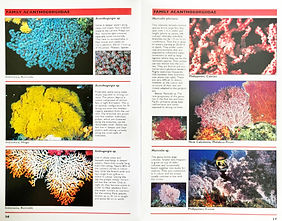
The idea for this book took shape in the late 1990s, when photography and communication were still largely analog. Tracking down successful reef aquarists around the world, getting in touch with them, and persuading them to participate in a collaborative book project was quite a challenge back then.
It took several years to gather enough material to showcase reef tanks from different parts of the world — their inhabitants, equipment, and the often very different approaches their owners had developed. Along the way, I met many interesting people, including Nelson Mandela's dentist at the time, who was himself an enthusiastic marine aquarist.
Looking back, this book seems to me like an early forerunner of the worldwide exchange of knowledge and experience that we now take for granted on social media. Except that back then, everything took considerably longer.
Dähne-Verlag, Ettlingen, 2001, 142 pages
German: ISBN 3-935175-05-1, Italian: ISBN 88-88789-07-02


Steinkorallen im Meerwasseraquarium Band 1 und 2
Originally, stony corals were supposed to get just a small, 64-page booklet in the AFA series. At least, that was what my publisher, Matthias Schmidt, had asked for, and I simply started writing.
But the deeper I delved into the subject, the clearer it became that there was no way to do justice to the fascinating world of these animals in so few pages. At some point, the question was no longer how to fit everything into 64 pages, but whether to turn it into one full-length volume or even two.
We ended up with two. The first focuses primarily on the biology of stony corals, their natural habitats, and the various genera. The second covers their care and propagation in aquaria, along with the equipment and technical requirements involved. What had started as a small guidebook had grown into a comprehensive reference work.
Natur und Tier - Verlag, Münster, 2002 – 2023, many print runs,
languages: German, Italian, French
ISBN: 978-3-86659-468-9 and 978-3-86659-260-5


Nano-Riffaquarien
Einrichtung, Besatz und Pflege kleiner Riffaquarien von 30 bis 150 Liter
The idea for this book grew out of my personal encounters with Japanese aquarist and nature photographer Takashi Amano, whom I met in the early 2000s. Amano had set new standards worldwide with his artistically designed freshwater aquaria, and I was particularly impressed by his miniature underwater landscapes. Why shouldn't something similar be possible with coral reef aquariums?
So I began setting up tiny aquaria holding just 0.5 to 5 liters of water, developed a special approach to maintaining them, and stocked them with small, sessile invertebrates. A cover story about these miniature reefs in KORALLE magazine and its American edition generated such an enthusiastic response that it eventually led to this book. Amano was fascinated by the idea as well and invited me to serve on the jury of his International Aquatic Plants Layout Contest (IAPLC).
What fascinated me most about these tiny reef aquariums, however, was the shift in perspective. In a large reef tank, an individual animal can easily get lost among the countless inhabitants. In a miniature reef, it suddenly becomes the center of attention. You look more closely and begin to discover things you might otherwise never have noticed.
Natur und Tier - Verlag, Münster, 2003/2018, 216 pages, languages: German, Italian, Russian, ISBN: 978-3.86659-390-9


Zehn Bände der AFA-Reihe (Art für Art):
Praxiswissen aus erster Hand
When I joined Natur und Tier Verlag in late 1999, we began developing a publishing program dedicated to marine aquaria. This included KORALLE magazine, where I served as editor-in-chief, as well as numerous nonfiction books that I oversaw as a technical editor.
Eventually, we also wanted to introduce a series of compact guidebooks modeled after the already established AFA series for terrarium enthusiasts. Our first attempt, a book about stony corals in 2002, had gone completely off track: Instead of a 64-page booklet, I had produced two substantial reference books. So in 2008, publisher Matthias Schmidt reminded me that we were still waiting for those marine aquarium guides.
This time, things went according to plan. I wrote seven volumes in succession, with three more following later. And in those later books, my personal passions played at least as important a role as the publisher's original plans.

With their beautiful, flower-like crowns of tentacles, feather duster worms are among the most attractive inhabitants of a reef tank. Unfortunately, they are also among the most misunderstood. Conditions that are ideal for fish and corals can be quite stressful for these delicate filter feeders. Turbulent water flow can damage their fragile feeding crowns, while fish constantly swimming past may cause them to retreat into their tubes again and again instead of feeding. Feather duster worms therefore need a habitat tailored to their particular needs.
With this little guidebook, I wanted to show that keeping them successfully depends less on sophisticated equipment than on understanding how they live.

For many people, starfish are practically a symbol of the ocean. It's hardly surprising that aquarists want to keep them in their reef tanks. But as fascinating as these animals are, their needs are all too easily underestimated. Many are highly specialized feeders, and even if an aquarium provides enough food for one starfish, that doesn't necessarily mean it can support a second. The two then compete for the same limited food supply and may slowly starve without showing any obvious outward signs.
With this little guidebook, I wanted to help readers better understand these unusual animals and explain why keeping them successfully requires much more than simply having a beautiful aquarium.

Sponges are something of a free bonus in reef tanks. Aquarists rarely buy them intentionally. Instead, they usually arrive unnoticed on the rocks attached to newly purchased corals. Once established, they become hardworking filter feeders, pumping enormous amounts of water through their bodies and helping to keep the aquarium water clean. Their astonishing diversity of shapes and colors is most apparent in places we rarely look: the dark corners behind and beneath the reef structure. Anyone who takes a flashlight and explores this hidden underwater world will discover a fascinating community of organisms that rivals the beauty and diversity of the visible reef.
With this little guidebook, I wanted to draw attention to this often overlooked world.

Reefkeepers often regard algae primarily as troublesome pests that need to be eliminated. Yet it's hard to imagine a reef tank without algae. The real question is which one of the species will prevail. In a newly established reef tank, fast-growing pioneer algae find ideal conditions and quickly colonize available surfaces before other species have a chance to establish themselves. What interested me, therefore, was not so much how to fight algae, but how to understand the competition among them and the ecological relationships involved.
As aquarists, we can help shape the algal community by providing suitable conditions and a balanced supply of nutrients — or we can simply leave the outcome to nature. That's exactly what this little guidebook is about.

Sea urchins are among the most useful helpers in a reef aquarium. As tireless algae grazers, many species keep unwanted growth under control. But their appetites can also become a problem, since sea urchins are specialized feeders whose dietary requirements vary from species to species. And even if a certain tank can support several individuals, adding just one more sea urchin may upset the food balance enough that all of them eventually starve. The tricky part is that they may show no obvious outward signs.
With this little guidebook, I wanted to explain why it's so important not only to understand the habits and needs of individual species, but also to accurately assess how much food they actually require.

Gorgonians are among the most beautiful inhabitants of coral reefs. While many species with symbiotic algae are relatively easy to maintain in aquariums, it is often the brilliantly colored species without symbionts that particularly fascinate reef aquarists. But their beauty can be deceptive. All of these non-photosynthetic species are highly specialized filter feeders that require specific food particles and water flow conditions. Some can only be kept under very particular circumstances, while others are practically impossible to maintain successfully in captivity.
With this little guidebook, I wanted to provide an overview of the different genera and their ways of life — and make it clear which species are best avoided.

Corallimorphs are among the least demanding inhabitants of a reef tank. But while they are easy to keep, their evolutionary relationships are surprisingly puzzling. For a long time, species that are not even particularly closely related have been grouped together under genus names such as Discosoma. Their evolutionary history is especially intriguing. They are closely related to stony corals, and there is evidence suggesting that their ancestors once possessed calcium carbonate skeletons, which they subsequently lost in the course of evolution. Scientists still have quite a bit to unravel here.
With this little guidebook, I wanted to introduce these unusual anthozoans, explain their biology, care, and propagation — and show how to prevent a few attractive specimens from eventually turning into a sprawling colony that crowds out other cnidarians.

I never would have expected a tiny Caribbean seahorse to become one of my particular favorites. I first encountered it through my collaboration with renowned underwater filmmaker Sigurd Tesche, whose productions I worked on as a scientific advisor and who also filmed in specially designed aquariums at my home. For a documentary about seahorses, for example, we wanted to use a high-speed camera to capture the lightning-fast suction feeding they use to catch their prey. For these shoots and others, I kept several species of seahorses, including, at Sigurd's request, the tiny Hippocampus zosterae, which grows to only about an inch (2.5 cm) in length.
I fell so much in love with these little fish that I continued breeding them for many years afterward. Eventually, I wanted to share my enthusiasm with other aquarists. That's how this little AFA guidebook about seahorses came to be.

When my publisher, Matthias Schmidt, asked me to write an AFA guidebook about a stony coral genus, I didn't have to think twice. While much of the reef aquarium hobby revolves around the highly sought-after, often outrageously expensive Acropora corals, Montipora tends to be overlooked. Yet this underrated genus has some remarkable abilities. Its symbiotic algae can even carry out photosynthesis inside the coral's calcium carbonate skeleton, contributing to its growth. And the unique structure of Montipora skeletons once even inspired the development of bone substitutes for humans.
For me, there were plenty of reasons to finally put Montipora in the spotlight. Alongside these biological surprises, the book naturally also covers the care and propagation of these extraordinary stony corals.

Soft corals tend to be overshadowed in the reef aquarium hobby. They are generally regarded as easy-to-keep corals for beginners, while most attention is focused on the more demanding stony corals. But I've always been particularly fascinated by such underrated groups of animals. I've studied soft corals extensively for many years and have also supported the research of coral taxonomists such as Phil Alderslade and Cathy McFadden with my macro and microscopic photography. Having a genus of stoloniferan corals named after me (Knopia) was a very special honor.
Things became particularly interesting with the genus Tubipora. Although several species had been scientifically described, no one could reliably match the historical species names to corals living today. So I began collecting different species, keeping them in laboratory tanks, and documenting their sclerites through microscope photography. My investigations and two articles in KORALLE magazine eventually helped spark an international research project, to which I later contributed as a coauthor.
For a long time, I had wanted to write a comprehensive book about soft corals. But by then, the market for such a book had become too small, so the project eventually turned into this little AFA guidebook — which, of course, also includes the story of Tubipora.
Some of the AFA volumes were also translated into other languages.


Aquarienbeleuchtung
Süßwasser- und Meerwasserbiotope im richtigen Licht
This book came about through an encounter with an American publisher at MACNA, the Marine Aquarium Conference of North America, in 1998. It was at the same conference that the idea for my book on aquarium photography was born.
Lighting is one of the more challenging aspects of aquarium keeping. After all, light should not only make an aquarium look attractive but, above all, meet the biological needs of its inhabitants. The book therefore explores the biological principles of light, different types of light sources, and how to create suitable lighting conditions in an aquarium.
As with my book "Aquarienfotos" (Aquarium Photography), I was also allowed to design the entire layout of this book myself using PageMaker — an experience that was as challenging as it was fascinating.
ISBN: 3-921684-63-3, Dähne-Verlag, Ettlingen, 1999, 110 pages


Aquarienfotos
Tipps und Tricks für Einsteiger und Fortgeschrittene
The inspiration for this book also came at MACNA in 1998. An American publisher told me that he regularly received photographs of aquaria and their inhabitants that were so poor in technical quality that he could hardly use them in print. Clearly, there was a need for a photography book that went beyond the usual basics and focused instead on the unique challenges of aquarium photography.
After all, you're shooting through glass that can cause distortion and reflections, dealing with difficult lighting conditions, and trying to photograph animals that rarely stay still as long as you'd like. So I wrote a book explaining how to overcome these problems with the right photographic techniques and capture the fascinating underwater world of your own aquarium in photographs that truly do it justice.
ISBN: 3-921684-57-9, Dähne-Verlag, Ettlingen, 1999, 136 pages


Riffaquaristik für Einsteiger
Preiswerte Technik – pflegeleichte Tiere
Sometimes you write a book without even realizing it. I had just prepared a series of articles for DATZ magazine, covering various groups of corals, their care, and their propagation. About twenty articles were already finished when it suddenly dawned on me that I was actually well on my way to writing a book. As luck would have it, around that time Dähne Verlag contacted me to ask whether I'd be interested in writing something for their marine aquarium publishing program. Of course I was.
The result was "Riffaquaristik für Einsteiger" (Reefkeeping for Beginners), my most successful book to date. Between 1998 and 2017, it grew from 200 to 322 pages through nine German editions, was published in five languages, and reached a total of 15 editions, with more than 50,000 copies sold. What fascinates me most is the thought that tens of thousands of aquarists in countries around the world probably took their first steps into the fascinating world of reefkeeping with this book.
This book introduces readers to hardy, easy-to-care-for animals, offers advice on choosing aquarium equipment, explains how to propagate most of the corals featured, and helps beginners avoid common mistakes and unnecessary expenses. Beautiful photographs also give readers a glimpse into the fascinating world of coral reefs.
Dähne Verlag, Ettlingen, Germany, published from 1998 onward. Depending on the edition, 199–322 pages and up to 650 color photographs.
Languages: German, English, French, Italian, and Swedish. ISBN: 978-3-944821-19-1


Riesenmuscheln – Arten und Pflege im Aquarium
In 1993, I found myself wondering what book I should write next. Part of me wanted to finally try my hand at a novel. On the other hand, I was also eager to write about marine aquaria, a field in which I was known at the time mainly for the protein skimmers I had designed and built myself with a little company.
I already had a subject in mind: giant clams of the genera Tridacna and Hippopus. By then, several good reference books on corals were available, but there was virtually nothing about keeping giant clams in aquaria, not even in other countries.
One day, my wife came home from work at the laboratory and told me about a Filipino doctoral student she had met there. Her husband was a marine biologist at the University of the Philippines Marine Science Institute (UPMSI), which operated a giant clam breeding facility in Pangasinan Province. This would give me the opportunity to do research, take photographs, study the different species, and even see these enormous clams in their natural habitat while diving. That settled the matter.
There was just one small problem: I didn't know how to dive or take photographs, let alone photograph underwater. So I learned photography, completed a scuba diving course, and received my first lessons in underwater photography from Klaus Gensel, a scientific cameraman who was spending eight weeks filming my 6,000-liter reef tank for the German television network ZDF.


Several trips to the Philippines followed, along with extensive research at the giant clam farm and an expedition around the island of Bohol with researchers from the University of San Carlos. Incidentally, it was during that expedition that I came up with the idea for my later coral farming projects.
The book was finally published in late 1994 and became a major success. The English edition also attracted many readers in the United States, where I suddenly found myself known as “the clam guy.”
Looking back, this book marked far more than the beginning of my career as a marine aquarium author. It opened doors I hadn't even known existed and ultimately changed my entire life. And it all began with a chance encounter between two women in a hospital laboratory.
This book introduces all giant clam species known as of 2009, describing their biology, anatomy, and reproduction. Its main focus is on keeping giant clams in aquaria, from choosing the right specimens to practical, proven care techniques. A comprehensive chapter covers the prevention and treatment of diseases, while another provides detailed guidance on captive breeding.
Dähne-Verlag, Ettlingen, 2009, 220 pages, languages: German and English
ISBN: 978-3-935175-43-2

Von Pest bis Aids
Die Infektionskrankheiten und ihre Geschichte
In the 1980s, I ran my own practice as a naturopathic practitioner while also devoting considerable time to training future practitioners. My book "Notfallmedizin für die Naturheilpraxis" (Emergency Medicine for Naturopathic Practitioners) was already widely used in practices and training programs, and drawing on my many years of experience in emergency medical services, I regularly conducted workshops on handling medical emergencies.
That's when I came up with the idea of making infectious diseases a little easier to learn about. Why not combine the essential facts about a disease with the story of its discovery and its history? After all, information is often easier to remember when you understand how it came to be known. Another source of inspiration was the emerging HIV infection, which had suddenly brought infectious diseases back into public awareness in an entirely new way. The result was a book that combined medical knowledge with medical history, making learning a little more effective than simply memorizing lists of symptoms.
Today, however, I wouldn't be entirely happy with the title "Von Pest bis Aids" (From Plague to AIDS). It reflects a time when HIV research was still in its early stages and AIDS was widely used in public discourse as an umbrella term for the entire HIV-related issue. Today, a book like this would undoubtedly have a different title.
The book provides an overview of human infectious diseases, including their causative pathogens, symptoms, and clinical manifestations, along with their historical background, major epidemics, and the development of treatments.
ISBN: 3-925367-48-9, Sommer-Verlag, Teningen, 1988, 170 pages, two print runs

Der Vetter-Ofen
Ein Erfinder, ein neues, umweltschonendes Heizsystem und ein jahrelanger Kampf gegen Bürokraten
Sometimes a book is born out of outrage. That was certainly the case with this one. A report on the German television program "Panorama", presented by Peter Gatter, introduced me to Richard Vetter, a master miller from Peine who had developed an innovative heating system and encountered fierce resistance from the established heating industry. The report showed how commercial interests, political influence, and questionable expert assessments could stand in the way of an invention. Decades later, after his patents had expired, the heating industry had adopted the underlying technology in its own condensing boilers.
What outraged me most was the thought that a story like this might be forgotten within just a few years. So I visited Richard Vetter in Peine and set out to write a documentary account of his invention and the obstacles he had faced.
Peter Gatter kindly contributed a foreword, in which he observed in 1987: “It seems that the fundamental ways in which innovations are treated have not changed since the days of Galileo Galilei and the Tailor of Ulm.”
ISBN: 3-923478-27-5, Verlag „Die Werkstatt“, Göttingen, 1987, 123 pages, six print runs

Das Seniorenbuch
Ein Ratgeber für ältere Mitbürger
In the mid-1980s, my publisher at the time, Jörg Sommer, asked whether I would be interested in writing a comprehensive guide for seniors, one that would offer practical advice for as many situations in everyday life as possible. Back then, there was no internet or smartphones that could provide virtually any information at your fingertips. So a reference book like this could actually be quite useful.
Why I, at the ripe old age of 32, thought I was qualified to offer advice to the world's senior citizens is something I still wonder about today. But I was enthusiastic about every new book project, and besides, I had just become the proud owner of a computer. I had written my first two books entirely by hand, and now I could finally type on a keyboard and watch my words appear on a glowing green screen. The machine didn't even have a hard drive, but that did nothing to dampen my enthusiasm. Back then, I was eager to take on just about any writing challenge.
The book offers practical advice on what older people can do to maintain their health and covers a wide range of topics, including sexuality, travel, sports, and housing in later life, as well as pensions, social benefits, and assistance for people with disabilities or those in need of long-term care.
ISBN: 3-925367-40-3, Sommer-Verlag, Teningen, 1988, 199 pages

Ratgeber zur Selbstmedikation
In 1990, I received a phone call from my publisher at the time, Jörg Sommer. He had a problem: He had already secured substantial financial support from pharmaceutical companies for a self-care guidebook, printing and distribution had been arranged, and the sponsors were waiting for the finished book. Unfortunately, it had become clear that the author he had commissioned was completely overwhelmed by the task. Now I was supposed to get the manuscript into publishable shape as quickly as possible.
After reviewing the texts, however, I had to tell Jörg Sommer that there was hardly anything worth salvaging. Revising the manuscript would take me at least three times as long as writing an entirely new book. His response was immediate: “Then write it!”
So I did. Sometimes being a generalist comes in handy — you can be put to work on just about anything.
ISBN: 3-925367-59-4, Sommer-Verlag, Teningen, 1990, 302 pages, multiple print runs

Ein Tee hilft immer
Ratgeber zur Selbstbehandlung mit Fertigtees
This book, too, came about thanks to an idea from my publisher at the time, Jörg Sommer. “Mr. Knop, you're a naturopathic practitioner. Couldn't you write a book about medicinal herbal teas?” Well, why not? I was familiar with medicinal plants and their uses from my practice, and writing another guidebook for my patients was always a welcome challenge. So I got to work.
This time, there were no particular obstacles, no unexpected twists, and no manuscripts in desperate need of rescue. I came, I saw, I wrote.
ISBN: 3-925367-71-3, Sommer-Verlag, Teningen, 1988, 120 pages

Selbstbehandlung von Kopfschmerz und Migräne
In the 1980s, I was still running my own naturopathic practice and had just written my first guidebook for patients on acupressure, following my book about emergency medicine for naturopathic practitioners. And I had developed a taste for it. Why not gradually publish a whole series of books showing patients what they could do themselves to relieve their symptoms?
On the one hand, I wanted to make my practice better known and establish a reputation for myself. On the other, I had long since realized that I actually enjoyed writing much more than the daily routine of seeing patients.
That's how my guide to self-treatment for headaches and migraines came about. Like my earlier acupressure book, it was published by Ennsthaler Verlag in Austria. Looking back, this little series of self-help guides was probably an early indication of the direction my professional life as a book author would eventually take.
Languages: German, Romanian, Slovak, Lithuanian.
ISBN: 3-85068-234-X Ennsthaler Verlag, Austria, 1987. Multiple printings.


Selbstbehandlung durch Akupressur
In 1986, I had been running my naturopathic practice for just two years, but my first book, "Notfallmedizin für die Naturheilpraxis" (Emergency Medicine for Naturopathic Practitioners), had already been published. In the process, I had discovered that writing came surprisingly easily to me, including the challenge of organizing complex subjects and explaining them in an understandable way. Back then, however, I still wrote everything by hand. I had never owned a typewriter, so my handwritten manuscript pages were sent to a professional typist, who typed them up for a fee. That was perfectly normal at the time.
To raise the profile of my practice, I came up with the idea of writing a self-help guide for patients. Acupressure involves stimulating specific points on the body by applying pressure with the fingers. I chose acupressure, even though I was already deeply skeptical of esoteric explanations in general. Today, I view the traditional concepts underlying this treatment even more critically than I did back then.
For the photographs showing the locations of these pressure points, my wife Rosa served as the model. A quarter of a century later, the publisher contacted me again and asked whether I could revise the book for a new edition. This time, I also included the electrical stimulation of acupressure points, a technique that had since been developed, and took all the photographs again. My daughter Melanie, now a medical doctor with a doctoral degree, served as the model for the book's pages and cover.
At the time, I told her that I fully expected to illustrate the next edition, another 25 years down the road, with photographs of my granddaughter. Unfortunately, she has yet to make the necessary arrangements.
Languages: German, Romanian, Slovak, Lithuanian, Russian.
ISBN: 978-3-85068-829-1, Ennsthaler-Verlag, Austria, 1986, multiple printings, starting from 2009 title „Akupressur und Elektro-Akupunktur“


Notfallmedizin für die Naturheilpraxis
This is where it all began. As a naturopathic practitioner, I had trained as an emergency medical technician and gained many years of practical experience working in emergency medical services with the Red Cross in Berlin. Because of this background, I was asked to conduct regular training workshops for fellow practitioners on handling medical emergencies in naturopathic practices. These weren't just lectures, but above all hands-on exercises: CPR, chest compressions, rescue breathing, placing patients in the recovery position, and many other skills that needed to be mastered in a real emergency.
To prepare for these workshops, I wrote a manuscript for myself that quickly seemed to take on a life of its own. It kept growing, eventually going far beyond what I actually needed for the training sessions. And more and more often, participants asked whether they could have a copy. At the time, there was virtually no emergency medicine literature specifically written for naturopathic practitioners. Eventually, I realized that I had already written most of a book without even noticing it. So I completed and revised the manuscript and offered it to a publisher, and Jörg Sommer from Sommer-Verlag accepted it: my first book was born.
What I didn't realize at the time was that this step would change the entire course of my professional life. Just a few years later, I gave up my practice to devote myself entirely to writing — a decision I've never regretted. To me, there are few things more rewarding than sharing knowledge with others by writing
But I owe much of my ability to pursue this path to my wife, Rosalinda. While I was establishing myself as an author, her work as a medical technologist provided the steady income that a family with children depends on. We've now been married for almost 48 years, and our two children have grown up to become two wonderful physicians. Perhaps my lifelong fascination with medicine and the human body played a small part in that.
Medical emergencies – Surgical emergencies – Complications from injections and acupuncture – Maintaining vital functions
ISBN: 3-925367-94-2, Sommer-Verlag, Teningen, 1985, 146 pages, four printings